
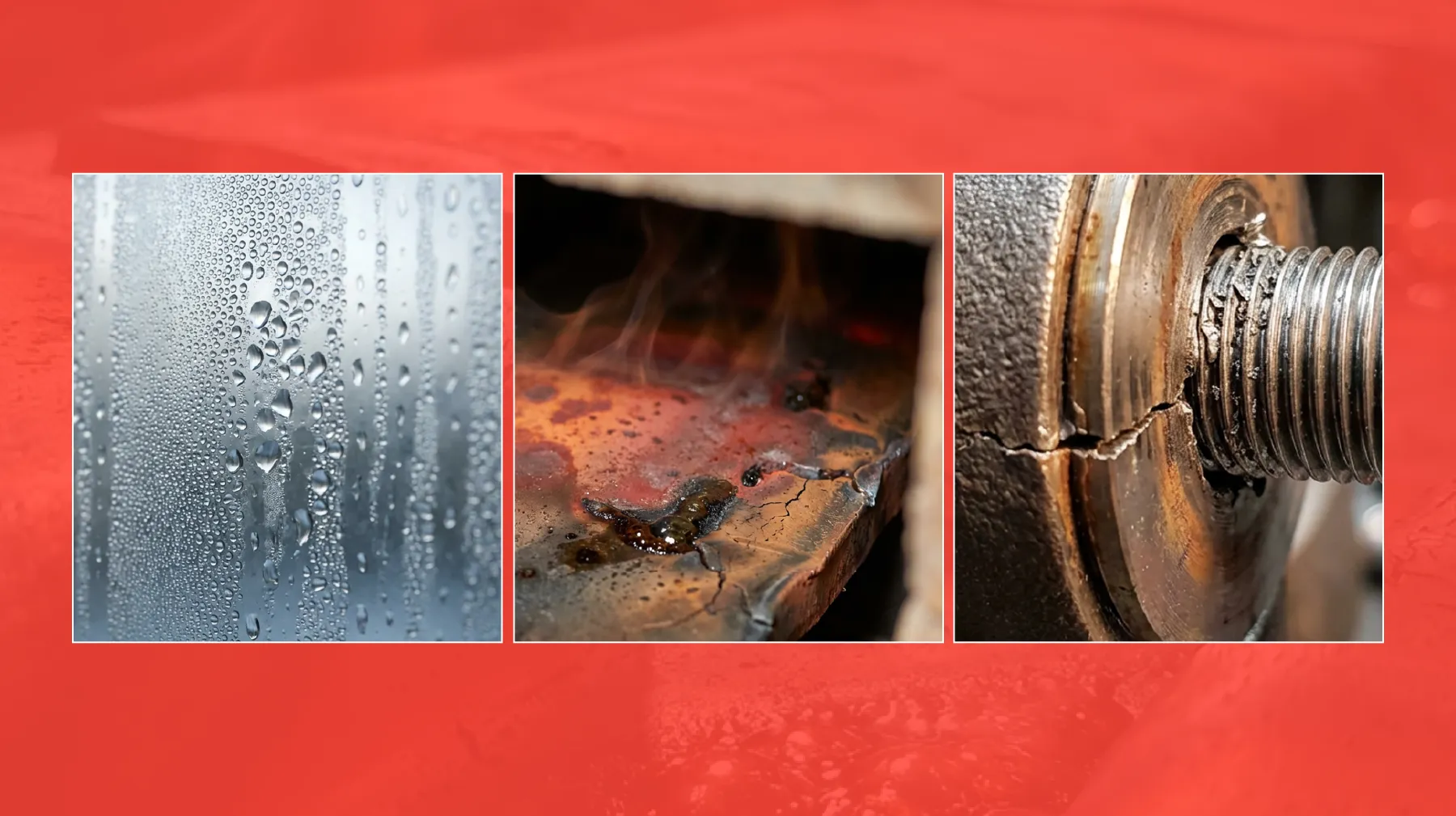
Electric process heaters are found in practically every industrial manufacturing operation. From producing ice cream to refining gasoline, chances are these heaters are performing a critical task somewhere along the line. Much like incandescent light bulbs, all process heaters will eventually fail and need repair or replacement. However, their lives can be extended by reacting to issues quickly or preventing them altogether. Today, we’ll look at common issues that industrial process heaters face, and how they can be handled or avoided.
Moisture
Many of the thousands of process heaters we’ve supplied over the years are replacements. This experience has taught us one thing above all: moisture is the biggest cause of process heater trouble and eventual failure. This is due mainly to the magnesium contained within them, which is hygroscopic, meaning it pulls water in. Couple this with a humid environment, and you have a perfect recipe for trouble. Once the heater gets too wet, fuses will pop. It will then need to be serviced.
If you suspect this is your issue, the best way to diagnose it is by using a megohmmeter. To do so, start by carefully disconnecting the heater. Then measure the resistance between the element terminals and the sheath/ground. A reading less than 1 megaohm typically indicates moisture contamination. It will need to be dried out before returning it to service.
There are couple of ways to dry it out. One is to bake the heater at a low temperature, around 200-250° for several hours. Alternatively, the heater can be powered at reduced voltage, which will slowly drive out the moisture.
Once the process heater is running again, it’s time to think about prevention. Since humidity is often the culprit, consider a dehumidification system to remove moisture from the air. It’s also a good idea to routinely change or reseat the end seal to help keep water from entering the heater. While a good cleaning can often get the heater running properly, units that are beyond repair will need to be replaced.
Scale Build Up
Another big threat to process heaters is scale build up. This typically happens in the tube walls, high-heat flux zones and in areas where flow is disrupted. In water systems, minerals such as calcium and magnesium become less soluble as temperatures increase, which causes them to bake onto tube wall surfaces. With hydrocarbon systems, high temperatures lead to coking. Here, the oil cracks and leaves a hard carbon residue on the surfaces.
Scale can usually be removed from your heaters by pressure washing. The process is fairly simple. Pull the unit, and carefully clean it. Certain installations may require specialized brushes and scrapers in addition to just water to properly remove the scale. Coke can also be removed from your heaters using a process known as thermal (or steam-air) decoking. Here, a controlled mix of steam and air is passed through the tubes while the heater is fired at a low level. This burns off the carbon, converting it into a gas. Note that this requires extremely precise temperature control, otherwise you’ll risk damaging the tubes.
Improper Startup
While it’s easy to compare a process heater to an incandescent bulb, they aren’t similar when it comes to startup. The reality is, heaters aren’t light switches. You can’t just flip them on!
Process fluids are often cold, thick, and move slowly. Firing the heater at high temperatures can lead fluid to stagnate, especially the layer that touches the tube walls. With hydrocarbon heaters, these stagnant layers can reach cracking temperatures very quickly, turning oil into coke rather than allowing it flow through. With water-based systems, sudden heat spikes will cause minerals to precipitate quickly.
Note that these are just a few of the problems that improper startup can cause. Besides these thermal shock issues, the heater can be subject to spalling, condensation issues, and dew point corrosion.
To prevent these startup threats, it’s best to establish a step-up procedure. Start with a minimal flow rate and lower temperature. Then ramp up slowly to avoid shocking the system. For specifics, we recommend following the manufacturer’s guidelines.
Misspecification
Another major reason that causes process heaters to fail prematurely is that they weren’t properly specified. They are not a “one size fits all” solution. While sometimes the heater can be modified to accommodate the use, unfortunately, the fix is usually to replace the heater entirely.
When sourcing a new heater, buyers must carefully consider the details of the application. This includes what fluid is being processed, temperature requirements, environmental conditions, throughput, cycle time, and other parameters. Be sure to work with manufacturers or distributors that will take the time to fully understand the demands of a particular installation. Getting it wrong will certainly lead to performance issues and, often, premature failure.
Conclusion
Process heaters are indispensable to most manufacturing processes today. The demands put upon them can lead to a variety of issues. While some are preventable, many of them are inevitable. But dealing with them properly and quickly will help extend their service life, and improve ROI. But one final tip for you. Bearing in mind that downtime can lead to incredible financial losses, it’s a smart idea to keep a spare heater on hand. This will help minimize outages, and the many headaches associated with them.
Is it time to replace your industrial process heater? Let us help you! We offer flange immersion heaters, screw plug immersion heaters, circulation heaters, and over-the-side heaters (where thru-the-side can’t be easily installed). Warren Electric Heating Technologies has been designing and manufacturing custom and standard immersion process heaters since 1962. We’ll do more than just provide a reliable replacement, we’ll provide a complete failure analysis to help you prevent future premature failures. Contact our application engineering team to get started.